

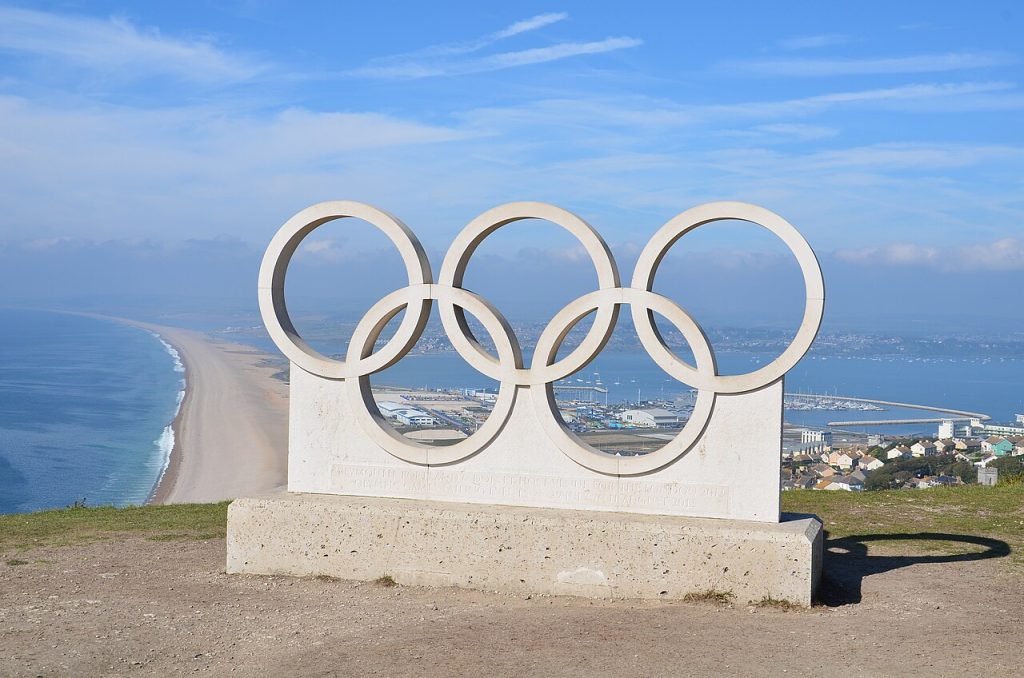
The history of the Olympic Games begins in ancient Greece, traditionally dated to 776 BC at Olympia, and the Games were revived in modern form in Athens in 1896. Since then they have grown from a gathering of a few hundred athletes into a worldwide event, with separate Summer and Winter Games and the Paralympics alongside them. This short history covers the main turning points.
The ancient Games
The ancient Olympics were held at Olympia, a sanctuary in the western Peloponnese dedicated to Zeus. The traditional start date is 776 BC, and the Games took place every four years. That four-year gap is the origin of the word “Olympiad”, the period between Games.
The programme began with a footrace and later grew to include events such as wrestling, boxing, chariot racing and the pentathlon. Competitors were men, and the festival had a strong religious element. Cities that were often at war would honour a sacred truce so athletes and spectators could travel safely to the site.
The ancient chapter of the history of the Olympic Games ran for well over a thousand years. They are traditionally said to have ended around the end of the fourth century AD, when the Roman emperor Theodosius ordered pagan festivals to stop, although historians debate the exact details.
The modern revival
Interest in reviving the Games grew in the nineteenth century. The key figure was Pierre de Coubertin, a French educator who believed sport could build character and promote understanding between nations. In 1894 he helped found the International Olympic Committee, and two years later the first modern Games opened in Athens in 1896.
Athens 1896 was small by today’s standards. Athletes were men, and the programme included athletics, gymnastics, swimming, cycling, fencing and other sports. Even so, it set the template of a regular international event held in a different city each time.
Early growth and setbacks in the history of the Olympic Games
The early twentieth-century Games were sometimes tied to world’s fairs, which made them long and disorganised. Paris in 1900 is notable because women competed for the first time, in sports including tennis and golf.
The wars of the twentieth century interrupted the cycle. The Games planned for 1916 were cancelled during the First World War, and the Games of 1940 and 1944 did not take place because of the Second World War. After 1945, London hosted a Games in 1948 and the event began to expand again.
Winter Games and the Paralympics
Winter sports at first appeared within the Summer Games, for example figure skating. A separate Winter Olympics was held at Chamonix, France, in 1924. For many decades the Winter and Summer Games took place in the same year, and from 1994 the Winter Games moved to a different two-year cycle so that an Olympic Games takes place every two years.
The Paralympic Games grew out of a sports event for wheelchair users organised in England in the 1940s by Dr Ludwig Guttmann. The first Paralympics are recognised as the 1960 Games in Rome, and in later decades they came to be held in the same host city as the Olympics.
Key moments in the history of the Olympic Games
| Year | Event |
|---|---|
| 776 BC | Traditional date of the first ancient Games at Olympia |
| 1894 | International Olympic Committee founded |
| 1896 | First modern Games, Athens |
| 1900 | Women compete for the first time, Paris |
| 1924 | First Winter Games, Chamonix |
| 1960 | First Paralympic Games, Rome |
| 2010 | First Youth Olympic Games, Singapore |
| 2021 | Tokyo Games, postponed from 2020 |
Symbols and traditions
Many of the Games’ best-known customs are modern. The five interlocking rings represent the union of five continents and appear on the Olympic flag, which dates from the early twentieth century. The Olympic motto, in Latin, is “Citius, Altius, Fortius”, usually translated as “faster, higher, stronger”. Other traditions include the opening ceremony parade of nations, the lighting of the Olympic flame and the medal ceremonies. The torch relay in its present form began with the 1936 Games in Berlin.
Politics and change
The history of the Olympic Games reflects the world around it. Boycotts affected the Games of 1980 and 1984 during the Cold War, and security and cost have been recurring issues. The number of sports, athletes and countries has risen steadily, and women now take part in all the sports on the programme. In recent years, host cities have also weighed the long-term use of venues more carefully, since a Games can leave behind costs as well as benefits.
The pandemic forced the first postponement of the modern Games in peacetime. The Tokyo Games, originally set for 2020, were held in 2021 with very limited spectators. Paris hosted the 2024 Summer Games, and Los Angeles and Brisbane are the hosts for 2028 and 2032.
Why the story matters
The history of the Olympic Games shows how much the Games have changed and how much they have stayed the same. The idea of athletes from many places meeting under shared rules goes back thousands of years. If this has made you curious about specific sports, read our explainers on the offside rule in football and the main cricket formats, or visit our sports section.
Frequently asked questions
When were the first modern Olympic Games held?
The first modern Olympic Games opened in Athens in 1896, two years after the International Olympic Committee was founded in 1894.
Why are the Olympics held every four years?
The four-year cycle comes from the ancient Games, which were held at Olympia every four years. The modern Games kept that rhythm, with the Winter Games now held on a separate cycle two years offset from the Summer Games.
When did women first compete?
Women first competed at the 1900 Games in Paris, in a small number of events such as tennis and golf. Their participation has grown considerably since then.
Have the Olympics ever been cancelled?
Yes. The Summer Games were cancelled in 1916, 1940 and 1944 because of world wars. Tokyo’s Games were postponed from 2020 to 2021, which was the first postponement in peacetime.
Further reading: Wikipedia overview: Olympic Games.

Written by Templates Hub
The Templates Hub editorial team writes practical, plain-English guides on law basics, health, lifestyle, business and sports, alongside free website templates and themes. Articles are general information and are reviewed for clarity before publishing.
More articles by this author →
Couch to 5K: An 8-Week Beginner Running Plan
A gentle eight-week plan that takes you from no running to jogging for 25 to 30 minutes, with…

How to Warm Up Before Sport: A Simple 10-Minute Routine
A simple, equipment-free 10-minute warm-up covering easy cardio, dynamic mobility moves and sport-specific drills.

Basketball Positions Explained: Roles on the Court
What each of the five basketball positions does on the court, and why modern teams treat positions as…
The Offside Rule in Football Explained Simply
A plain-English guide to the offside rule in football: what counts as offside, when it does not apply…