

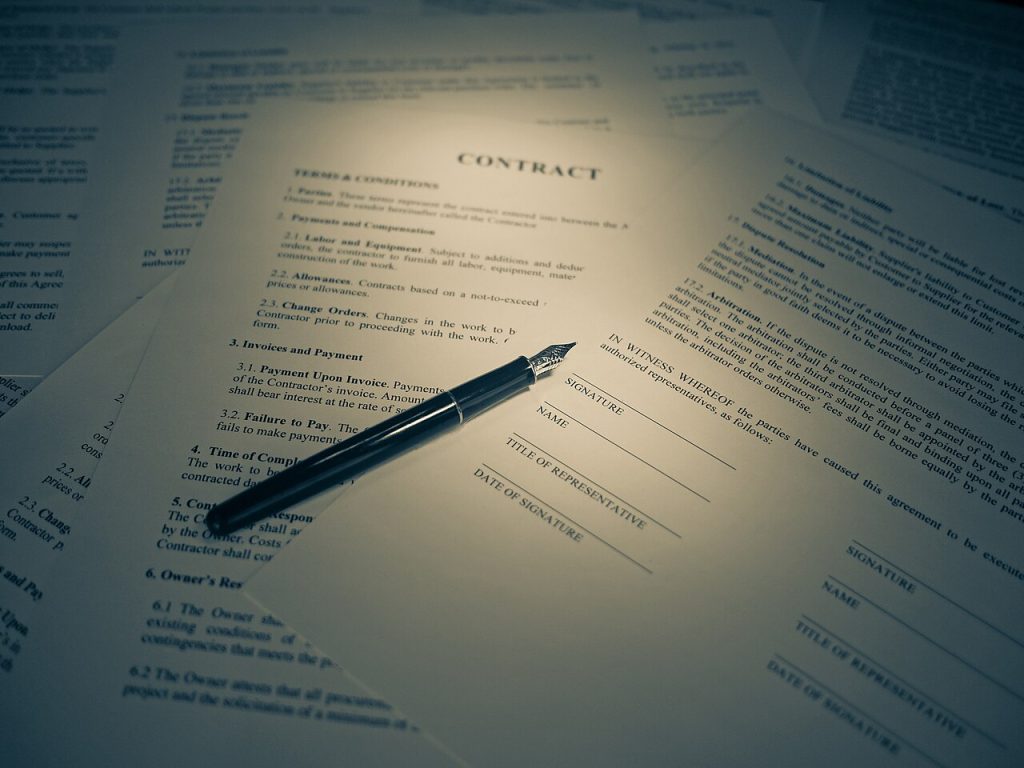
What is a contract? It is a legally enforceable agreement between two or more parties, in which each side promises to do (or not do) something. Most contracts need an offer, acceptance, something of value exchanged, and a shared intention to be legally bound. Once you know those pieces, even a long document becomes much easier to read.
General information only: This article explains general principles and is not legal advice. Contract law differs between countries, and between states or provinces, so the details may not match your situation. For a specific agreement or dispute, speak to a qualified lawyer or a legal aid service.
What is a contract made of? The key elements
Courts in common-law countries (such as the US, UK, Canada, Australia and India) generally look for the same core building blocks. When deciding what is a contract and what is not, they ask whether these pieces are present. Without them, a promise may be a good intention but not something a judge will enforce.
- Offer: one party clearly proposes terms, such as “I will paint your fence for 200 dollars.”
- Acceptance: the other party agrees to those exact terms. If they change something, that is usually a counter-offer, not acceptance.
- Consideration: each side gives something of value. That might be money, goods, a service, or a promise to refrain from doing something.
- Intention to create legal relations: both sides mean the deal to be binding. A casual plan to meet for dinner is not a contract, but a signed supplier agreement is.
- Capacity: the people involved must be legally able to contract. Young children and people who cannot understand the deal are usually protected.
- Legality: the purpose of the agreement must be lawful.
Does a contract have to be written?
Not always. Many everyday contracts are spoken or implied: buying a coffee, hopping on a bus, or hiring a plumber by phone. The law can enforce these too.
The trouble is proof. If there is a disagreement about what was said, a written record settles the argument far more easily. Some types of agreement, such as the sale of land or certain long-term guarantees, usually must be in writing to be enforceable. The exact list depends on where you live, so check local rules.
Email and electronic signatures
In many places, an agreement made by email, or signed with an electronic signature, can be just as valid as one signed with ink. A few document types, such as some wills and property transfers, may have special requirements.
How to read a contract without getting lost
Contracts look intimidating because they are written to leave little room for doubt. A steady, section-by-section approach helps.
- Identify the parties. Check that names, business names and addresses are correct and that the right person or company is signing.
- Find the definitions. Capitalized words usually have a specific meaning explained near the start or end. Read those meanings, not your assumptions.
- Locate what each side must do. Look for deadlines, deliverables, payment amounts and payment dates.
- Check the money. Note late fees, deposits, refunds, price increases and who pays for extras.
- Read the exit terms. How long does the contract last? Does it renew automatically? How much notice is needed to cancel?
- Look at the risk clauses. These cover who is responsible if something goes wrong.
- Ask about anything unclear before you sign. After signing, “I did not understand it” is rarely a strong defence.
Common clauses and what they mean
| Clause | Plain meaning |
|---|---|
| Term and renewal | How long the deal lasts, and whether it continues automatically |
| Termination | How and when either side can end the agreement |
| Indemnity | One side agrees to cover the other’s losses in certain situations |
| Limitation of liability | A cap on how much one side can be asked to pay if things go wrong |
| Confidentiality | Information that must not be shared with outsiders |
| Governing law | Which country’s or state’s law applies to the contract |
| Dispute resolution | Whether disagreements go to court, mediation or arbitration |
| Entire agreement | The written document replaces earlier discussions and promises |
Warning signs to watch for
You do not need to be a lawyer to spot trouble. Slow down if you see any of these.
- Blank spaces that could be filled in after you sign
- Automatic renewals buried in small print with short cancellation windows
- Vague wording about price, scope or deadlines
- One-sided termination rights, where only the other party can walk away
- Pressure to sign immediately without time to review
If a promise matters to you, make sure it appears in the written text. Verbal assurances that are not in the document may not count, especially if there is an entire-agreement clause.
What happens if someone breaks a contract?
Knowing what is a contract also helps you see when one has actually been broken.
A breach happens when one side fails to do what it promised, without a valid excuse. Typical remedies include financial compensation for the loss, a court order requiring the promise to be carried out, or the right to end the contract. Before going to court, many people start with a polite written reminder, then a formal letter. Cheaper routes such as mediation or small claims court may suit smaller disputes.
Keep copies of everything: the signed contract, emails, invoices and receipts. Good records are often what decides a dispute.
Contracts you may meet in everyday life
What is a contract in daily life? Far more than most people think. Most people sign more contracts than they realize: rental agreements, phone plans, gym memberships, employment offers and online terms of service. If you run a website, you will also meet agreements about data, such as a privacy policy for your website. Freelancers and small firms may also want to see our guide to pricing your services before putting figures in writing. For more plain-English explainers, browse the law section.
Frequently asked questions
Is a verbal agreement legally binding?
Often yes, if the basic elements of what is a contract are present. The difficulty is proving the terms later. Some agreements, like those involving land, usually must be written to be enforceable.
Can I cancel a contract after signing it?
Only if the contract allows it, the other side agrees, or the law gives you a cooling-off period for that type of deal. Many consumer purchases made online or at your door have such rights, but they vary by country.
What is consideration in simple terms?
It is the value each side gives in the deal. One person pays money, the other provides goods or a service. A one-way promise with nothing in return is usually a gift, not a contract.
Should I get a lawyer to review a contract?
For large or long-term commitments, such as buying property, starting a business partnership or signing a major employment deal, professional review is usually worth the cost. For small, routine agreements, careful reading may be enough.
Further reading: Wikipedia overview: Contract.

Written by Templates Hub
The Templates Hub editorial team writes practical, plain-English guides on law basics, health, lifestyle, business and sports, alongside free website templates and themes. Articles are general information and are reviewed for clarity before publishing.
More articles by this author →
Tenant Rights 101: What Every Renter Should Know
Renters have protections on repairs, deposits, privacy and eviction. Learn the common rules and what to do when…

Copyright Basics: What You Can and Cannot Use Online
Most online content belongs to someone. Learn how copyright, licences and exceptions work, and how to check before…

How to Make a Will: Simple Steps to Protect Your Family
A will lets you decide who inherits your property and who looks after your children. Here are the…
How to Write a Privacy Policy for Your Website
A privacy policy tells visitors what data your site collects and why. Learn what to include and how…