
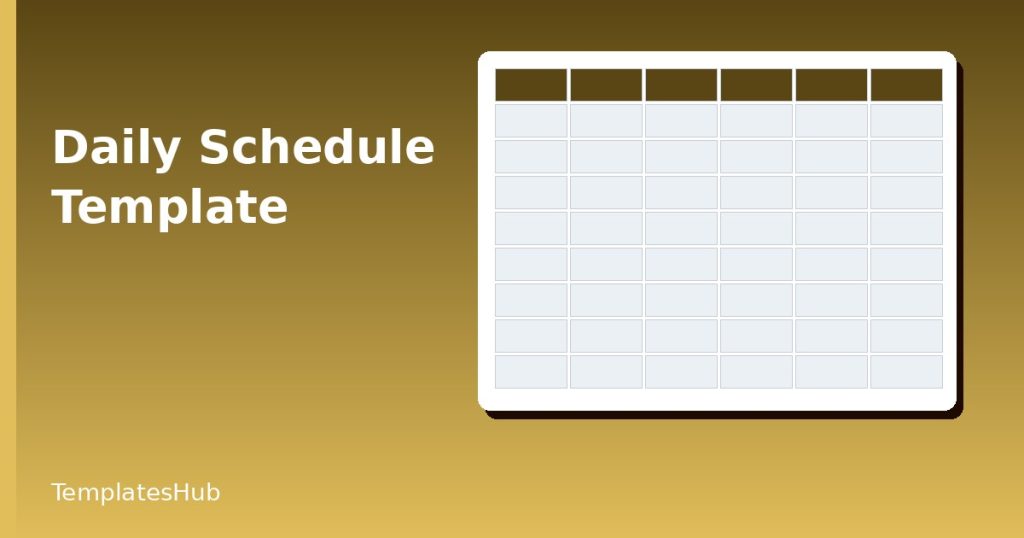
Mornings go better when you decide what the day looks like before it begins. A daily schedule template gives you one page, a column of times and enough room to place what matters. It will not make you a different person, but it shows quickly when you have planned ten hours of tasks into six.
Layout of a Useful Daily Schedule Template
Keep it to a single page. A strong layout usually has:
- Date and day at the top, so old pages do not pile up confusingly.
- Top three priorities in a box. These are the things that make the day a success.
- Time column running from when you wake to when you stop, in 30 or 60 minute rows.
- Appointments marked in a different colour or bold.
- To-do list for small tasks that fit between blocks.
- Notes or brain-dump area at the bottom.
- Habit or water checkboxes, if you like tracking them.
Choose 30-minute rows if your day has many short tasks, and hourly rows for deep work. If a page looks crowded, remove a section.
How to Fill It Out Each Morning
- Write the date and your top three priorities first.
- Add fixed commitments: meetings, school pick-up, calls.
- Put your hardest priority in your most alert hours. For many people that is the morning.
- Slot smaller tasks into the gaps, and group similar ones, such as emails and errands.
- Add meals and a real break, even if just 15 minutes.
- Leave one or two open rows for things that spill over.
Planning the evening before takes about five minutes and means you wake up with a plan already done.
A Sample Day
- 07:00 Breakfast, review plan
- 08:00 Priority 1: draft the report
- 10:00 Break and messages
- 10:30 Calls and follow-ups
- 12:00 Lunch away from the screen
- 13:00 Priority 2: client proposal
- 15:00 Errands and admin
- 16:30 Priority 3 or catch-up buffer
- 17:30 Review: what moved, what carries over
This looks neat on paper, and the real day will differ. That is fine. Use the sheet to adjust, not to feel guilty.
Time Blocking Without the Stress
Time blocking means giving each task a set slot. The risk is making the blocks too tight. Add a margin: if you think a task takes 45 minutes, block an hour. Use theme blocks, like “writing” or “admin,” for work that varies in size. When something interrupts you, redraw the rest of the day with a pencil, instead of abandoning the whole plan.
Paper or Digital
Printed pages feel satisfying, and crossing things out works well for motivation. Digital versions are handy when you want to copy yesterday’s unfinished items into today. A simple spreadsheet from our Excel templates is easy to adapt, and the planner templates page has companion weekly and monthly sheets. For a broader view of your week, see the general schedule template guide.
Mistakes That Make Plans Fail
- Planning every minute. Reality will break it by mid-morning.
- Too many priorities. If everything is a priority, nothing is.
- Ignoring energy. Do not place creative work in your slump hour.
- Forgetting transitions. Moving between tasks takes time.
- Skipping the review. Two minutes at night shows what to change tomorrow.
Adjusting for Different Lives
Parents may need a template with child-related rows and flexible naps or school times. Students can mark classes, study blocks, and a “do not touch” revision slot. Remote workers benefit from clear start and end times to protect personal hours. Shift workers can make the day start at 14:00 or 22:00, whenever their waking period begins. The template is yours, so change it.
Making It a Habit
Keep the page where you will see it, with a pen close by. Tie the planning ritual to something you already do, such as coffee. After a week or two, notice which sections you ignore and delete them. A lean template gets used. A bloated one gets abandoned.
FAQ
How detailed should a daily schedule template be?
Detailed enough to place your fixed commitments and top priorities, and loose enough to leave gaps. Hourly rows work for most people.
What time should I plan my day?
The evening before, or first thing in the morning. Pick whichever you will do reliably.
What if my day falls apart?
Take a minute, cross out what no longer fits, and re-plan the remaining hours. Moving one task is better than dropping the whole plan.

Written by thadmin_r7
The Templates Hub editorial team writes practical, plain-English guides for everyday readers.
More articles by this author →
Super Bowl Squares Template 2026: Printable Grid and Rules
Get a Super Bowl squares template 2026 setup: a 10x10 grid, how the digits work, payout ideas, and…
Budget Excel Template: Track Income, Bills and Savings
A budget Excel template adds totals and charts to your monthly plan. See how to set up sheets,…
To Do List Template: Layouts That Help You Finish Things
A to do list template helps you sort tasks by priority and deadline. See layouts that work, how…

Excel Calendar Template: Build and Use Your Own
An Excel calendar template updates dates automatically and prints cleanly. Learn where to find one, customise colours, add…