
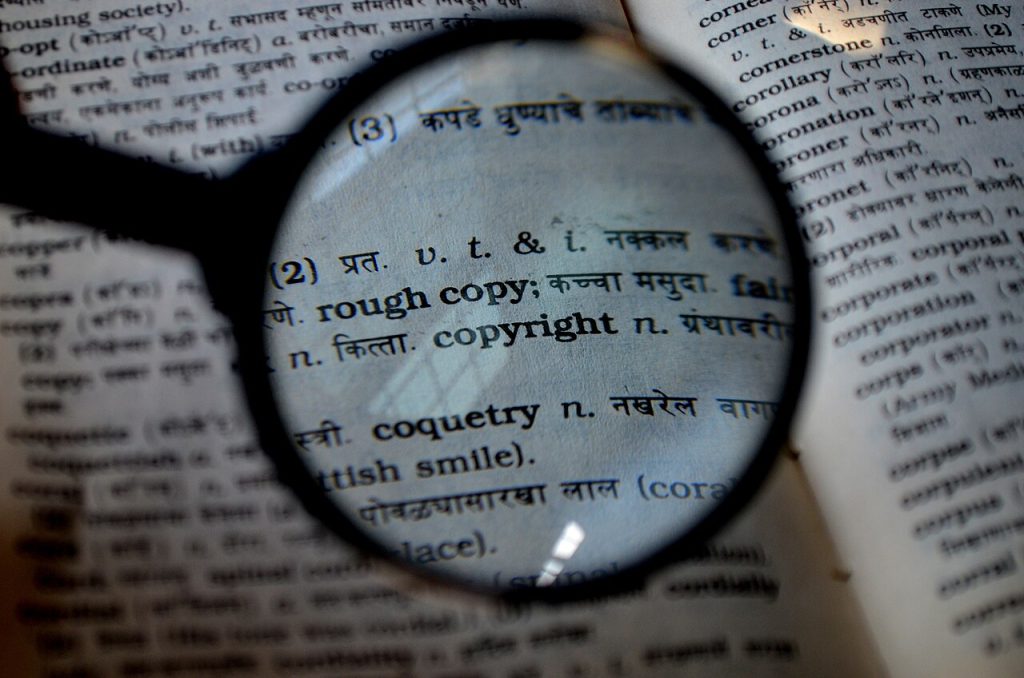
Copyright basics start with one rule: copyright automatically protects original creative work, including photos, writing, music, videos and artwork, the moment it is created. In general, you cannot copy, post or sell someone else’s work online without permission, unless it is in the public domain, carries a licence that allows it, or falls under a narrow legal exception. The safest habit is to assume that anything you find online belongs to someone.
General information only: This article explains broad principles and is not legal advice. Copyright rules differ between countries, for example in how long protection lasts and how exceptions work. If you face a claim or are planning a commercial project, consult a qualified intellectual property lawyer.
Copyright basics: what is actually protected
The first of the copyright basics is that copyright covers the expression of an idea, not the idea itself. You cannot own the concept of a love story, but you can own the particular novel you wrote about one.
Things typically protected include:
- Articles, blog posts, books and poems
- Photographs, illustrations and graphic designs
- Songs, recordings and videos
- Software code
- Website layouts and original text on them
Things generally not protected include facts, ordinary names and short slogans, and plain ideas or methods. Protection usually arises without registration or a copyright symbol, though registering can help in some countries if you ever need to enforce your rights.
Common myths that cause trouble
“It was on Google Images, so it is free”
Search engines show images; they do not grant permission to use them. Each image still belongs to its creator unless stated otherwise.
“There was no copyright notice”
Copyright does not depend on a notice. A missing symbol does not make a work free to copy.
“I gave credit, so it is fine”
Crediting the creator is polite and sometimes required by a licence, but on its own it does not replace permission.
“I am not making money from it”
Non-commercial use can still infringe. It may be relevant to certain exceptions, but it is not a blanket defence.
What you can use online
Public domain works
When protection expires, or when a creator or government has released a work, anyone can use it. Duration rules vary by country, and a work can be public domain in one place but not another, so check before assuming.
Licensed works
Many creators publish under licences that spell out how you may use their work. Creative Commons licences are a well-known example. Each licence has conditions, so read them.
| Licence type | What it generally means |
|---|---|
| Attribution only | You can use and adapt the work if you credit the creator as required |
| Non-commercial | You can use it, but not for commercial purposes |
| No derivatives | You can share it, but not change it |
| Share-alike | Your adapted version must carry the same licence |
| Public domain dedication | The creator gives up rights as far as the law allows |
Stock libraries and paid licences
Stock photo and music sites sell or give licences with defined limits. Keep a record of where each file came from and the licence terms in force on the day you downloaded it.
Exceptions: fair use and fair dealing
Some countries allow limited use of copyrighted work without permission for purposes such as criticism, news reporting, teaching, research or parody. The US calls this fair use, while the UK, Canada, Australia and India have their own versions, usually called fair dealing, with narrower and more specific categories.
These exceptions are decided case by case. Courts commonly look at the purpose of the use, the nature of the original, how much was taken and whether it harms the market for the original. Because the outcome is hard to predict, do not treat “fair use” as a magic phrase you can add to a post.
A copyright basics checklist before you post
- Did you create it yourself, or do you hold the rights?
- If not, can you find the creator or the licence?
- Does the licence allow your type of use, such as commercial, edited or shared?
- Have you met the conditions, such as the required credit wording?
- Do you have a record, like a screenshot or receipt, of the licence?
- If you are unsure, can you ask permission, use a different image, or make your own?
Writing to a creator for permission is often quick and many reply kindly. Keep that email as proof.
What if you receive a takedown notice?
Understanding copyright basics also helps when trouble arrives. Platforms and hosts usually act on formal complaints from rights holders. If you get one, do not ignore it. Read what is being claimed, remove the material if you know it is not yours to use, and keep a copy of the notice. If you believe it is a mistake, many platforms offer a counter-notice process, though you should understand the consequences first.
Website owners should also be aware that visitor-submitted content, like comments, can create copyright issues. Your privacy policy and terms of use can help set expectations. Permissions are themselves agreements, so it helps to understand what a contract is. If you are designing pages with ready-made assets, see our tips on choosing a website template. For related topics, visit the law section.
Frequently asked questions
Can I use a few seconds of a song or a short quote?
Copyright basics do not include a safe minimum length that applies everywhere. Short quotes may be allowed under an exception, such as for criticism or review, but music samples are often treated strictly. Get permission when you are unsure.
Who owns a photo that someone took of me?
Usually the photographer owns the copyright, not the person in the picture. Privacy or image rights may also apply, depending on the country.
Is it legal to share a meme?
Many memes use copyrighted images. Sharing is common but not automatically lawful. Risk is generally higher for businesses and commercial accounts than for casual personal sharing.
How long does copyright last?
It varies by country and type of work. In many places, it lasts for the creator’s lifetime plus several decades. Check the rules for the specific country and work.
Further reading: Wikipedia overview: Copyright.

Written by Templates Hub
The Templates Hub editorial team writes practical, plain-English guides on law basics, health, lifestyle, business and sports, alongside free website templates and themes. Articles are general information and are reviewed for clarity before publishing.
More articles by this author →
Tenant Rights 101: What Every Renter Should Know
Renters have protections on repairs, deposits, privacy and eviction. Learn the common rules and what to do when…
How to Make a Will: Simple Steps to Protect Your Family
A will lets you decide who inherits your property and who looks after your children. Here are the…
What Is a Contract? Key Elements and How to Read One
A contract is a legally enforceable agreement built on offer, acceptance and value exchanged. Here is how to…
How to Write a Privacy Policy for Your Website
A privacy policy tells visitors what data your site collects and why. Learn what to include and how…