
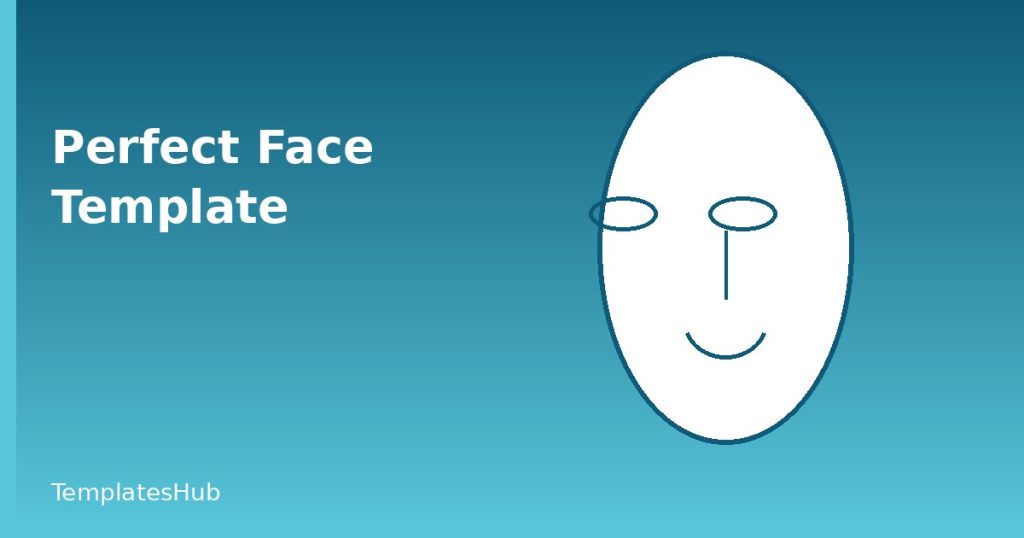
A perfect face template is a printed outline of a face with guide lines for the eyes, nose and mouth. Makeup artists use it to sketch looks before touching a client. Art students use it to learn proportion. Either way, the point is the same: you get a blank, consistent surface to practice on, again and again, without wasting skin or good paper.
What the Template Contains
Most printable versions include:
- A front-view head outline, sometimes with neck and shoulders
- A vertical center line
- A horizontal line through the eyes, roughly halfway down the head
- Lines for the base of the nose and the mouth
- Optional side views, plus eye, lip and brow close-ups
The classic proportions are a teaching shortcut, not a rule of beauty. Real faces vary, and that is exactly why a neutral template is helpful: it gives you a baseline to adapt.
Printing It
Paper and size
Standard letter or A4 paper is fine for sketching. If you plan to use markers or watercolor pencils, choose a heavier sheet, around 100 to 120 gsm, or print on matte presentation paper. Marker bleed is a real problem on thin copy paper.
Set your printer to “actual size” or 100 percent so the guide lines stay in proportion. For detailed eye work, print a second copy scaled larger so you have room.
Printing in bulk
Make a stack of ten or twenty. A makeup chart pad is more useful when you can try three versions of the same look side by side. Some people slide the sheet into a clear plastic sleeve and use dry-erase markers for endless reuse.
Using a Perfect Face Template for Makeup
- Pencil the structure. Light lines for brows, eye shape and lip outline.
- Choose a palette. Pick three to five shades you actually own.
- Block in color. Lay down the eyeshadow base, blush and lip first.
- Add depth. Define the crease, outer corner and highlights.
- Label. Write product names and shade numbers beside the sketch so you can recreate it.
- Photograph or file it. Keep the finished sheets in a binder by occasion.
This is especially handy for bridal trials, theatre looks and clients who like to approve a plan in advance.
Using It for Drawing Practice
Trace the outline once to feel the proportions, then close the template and try to draw the face on a blank page using the same landmarks. Compare the two afterwards. Practicing the eye line, nose base and mouth spacing builds muscle memory quickly.
Try a series: a neutral face, then a smile, then a three-quarter turn. For ideas on other printable guides, see our drawing templates and the nail templates page, which uses a similar sketch-first approach.
Tips for Better Results
- Work from light to dark, so you can fix mistakes.
- Use colored pencils for makeup charts, since they mimic powder shades well.
- Keep your guide lines faint; they should disappear under color.
- Sharpen tools often for crisp lip and liner edges.
- If your face shape is different from the template, draw your own outline over it and keep the same landmark lines.
Common Problems
The proportions look off. The template is symmetrical, so compare against a photo of the actual person and move the eye line or jaw slightly.
The paper buckles. Too much wet media. Switch to pencils or a heavier stock.
The colors look dull. Printer ink under pencil can muddy tones. Print the template in light gray rather than black.
Making Your Own
Draw one face you like, scan it at 300 dpi, lighten the lines to about 30 percent in an image editor, and print copies. You can add your own boxes for notes such as skin type, event and products. That is a perfect face template shaped around how you actually work.
FAQ
Is a face template only for makeup?
No. Artists, cosplayers, tattoo designers and teachers all use them for planning and practice.
What size should I print?
Letter or A4 works for most uses. Print larger if you want room for small details around the eyes.
Can I reuse one sheet?
Yes, if you laminate it or use a plastic sleeve with dry-erase markers.

Written by thadmin_r7
The Templates Hub editorial team writes practical, plain-English guides for everyday readers.
More articles by this author →
Nail Template: Print, Cut and Use for Neat Nail Art
A nail template is a printed outline of fingernail shapes, and it is one of the cheapest ways…

Creative Ways to Wear a Scarf on Your Neck for Every Occasion
Mastering how to wear a scarf on neck female can elevate any outfit. Discover creative styles, essential techniques,…

Vestido con botas vaqueras is the ultimate outfit for 2023
The vestido con botas vaqueras has become a fashion staple in 2023, blending style and practicality for any…

Elevate Your Style with Linen Pants in 2023
Elevate your summer wardrobe with tips on how to wear linen pants, from casual outings to office attire,…